Is Smoke Damage Covered by Insurance in Florida? What Homeowners Should Know
When the unexpected happens, we help individuals and businesses collect the money they deserve for their insurance claims.
Melamed Blogs
December 23, 2025
Is Smoke Damage Covered by Insurance in Florida? What Homeowners Should Know
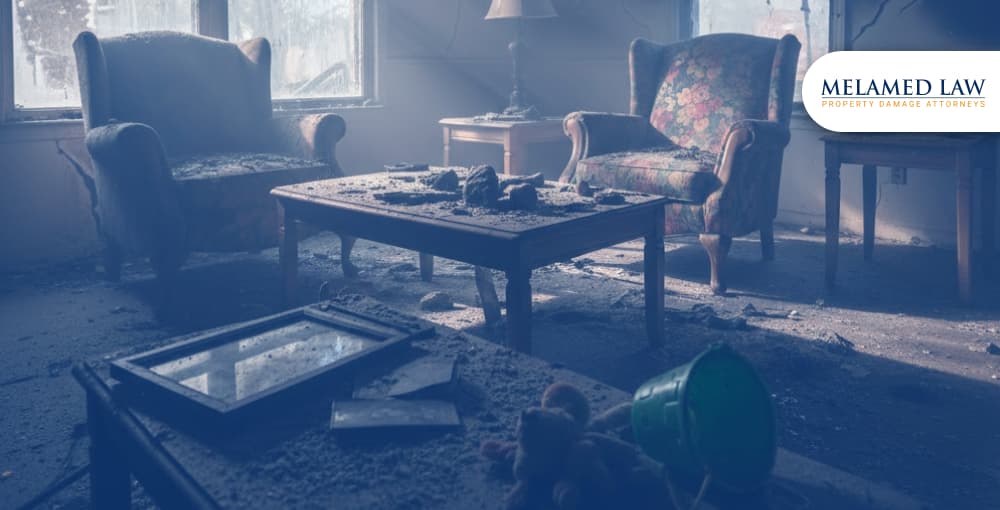
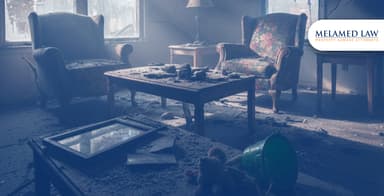
The first thing you notice when you enter a smoke-damaged home is not the devastation, but rather the odor. Smoke permeates every nook and cranny of a house, transforming once-familiar spaces into memories of the past. I've stood next to families in Florida as they reopened their homes following a fire, facing soot-covered rooms and sorrow-filled air. Will my insurance help cover my smoke damage? is a question they ask all the time.
And when insurance reads like a puzzle and adjusters talk more legally than sympathetically, I've discovered how quickly that hope in their eyes fades. However, every case starts with someone attempting to figure out what's left, what's covered, what comes next, and why they need a property damage lawyer.
1) Can You Claim for Smoke Damage?
When the initial shock passes, Florida homeowners call me with lists of questions that are really requests for reassurance. They want me to turn their insurance clause into plain steps they can follow.
In Florida, the simple truth is smoke damage can be covered; however, whether you get paid often depends on how the smoke started and how your policy defines covered perils.
I remember a client who thought their policy covered "fire" and assumed smoke was included until the adjuster pointed out a clause limiting coverage to smoke from an accidental fire.
So, I explain their declarations page, showing them where terms like "named perils" and "all risks" appear and what those headings mean for their claim. A few practical things are always worth knowing:
Check the declarations page for covered perils
Look for separate deductibles
Document the moment you discovered the damage
These small actions change how an adjuster interprets your loss, and they give you an advantage when you need it most.
2) Will Insurance Pay for Smoke Damage?

When I explain coverage to a homeowner, I start with 3 practical sequences of a claim because the complexity of the process often confuses you about the outcome.
First, the dwelling coverage, which pays to repair or replace the parts of your home that were damaged.
Second, personal property coverage, which answers for the things you own, subject to limits and valuation rules.
Third, additional living expenses, which help with short-term housing and everyday costs while your home is being restored.
Some policies cover replacement cost, which tries to put you back where you were; others pay actual cash value, which subtracts wear and age.
At the end of every smoke claim, two limits often decide how the story ends. The first is your dwelling coverage. If it is set too low in comparison to the actual cost of rebuilding, your carrier may use coinsurance to reduce what you owe.
Then there’s additional living expense coverage, and people thought a hotel room would be covered for as long as it takes to get home again. However, it doesn’t work that way, because policies vary, state practices vary, and I’ve seen families forced to move three times because the clock ran out before the house was ready.
From my experience with my client, some insurance companies undervalue a victim's claim by focusing on visible damage. However, the costly and gradual hidden threat is often overlooked because smoke leaves acidic residues in HVAC systems, sticks to insulation, and drains into porous materials that look fine on the surface.
Before this contamination turns into a loss in your claim, I suggest my client take proper documentation.
In some cases, adjusters and policyholders may sometimes disagree on disputed causes, mixed perils, and timing, which can be resolved through careful evidence and clear reading.
So, another piece of advice I give my clients is to contact their insurer and inquire about the documentation they require, as irreversible cleanup can complicate causation questions.
3) Which Policy Details Could Change Your Claim?

When a claim is based on a single clause, I advise clients to slow down and look for the exact words that control payment, because policy is where you can recover your damages.
Begin with the section titled "Perils Insured Against," then look for any endorsements, exclusions, and deductible provisions. Those lines will tell you whether smoke from an accidental house fire, a wildfire, or smoke caused by a storm are treated the same.
In Florida, hurricane and named storm deductibles are frequently percentage-based and separate from the standard deductible.
If the carrier claims the loss occurred during a storm, the different deductible may suddenly change how much you owe; however, this does not imply that every smoky loss is a storm loss.
What I've noticed is that insurers will sometimes try to classify smoke or fire damage as "storm-related" if it happened around the same time as a hurricane or tropical system, which shifts more of the cost to you. However, unless the smoke damage was directly caused by the storm, that higher deductible shouldn’t apply.
I also watch for the gaps in coverage that most homeowners overlook, such as endorsements and exclusions that live in annexes rather than on the declaration page. Because pollutant endorsements can change whether costly duct cleaning or removal of contaminated materials is paid.
However, if there’s an absence of such an endorsement, it can leave a homeowner arguing over necessity rather than entitlement, and knowing whether those riders exist before negotiations begin gives you a practical advantage of insurance coverage.
I advise my clients to keep damaged items, tag them, and record the age and purchase information if possible, because salvage value impacts how losses during smoke damage are settled.
For additional living expense coverage, keep track of hotel bills, meals, and storage charges as they occur, along with receipts. When claims stall, the papers you kept on the day you discovered the smoke are often the clearest record of need and the simplest way to demonstrate that your recovery was not optional.
However, limits and timeframes vary, so don't assume every night away will be covered by insurance without a clear, contemporaneous record of expenses.
I understand that phone calls, forms, and inspections can feel like an extra burden when you're already exhausted, yet organized records and calmly following up truly change how your smoke claim proceeds.
As a result, I recommend bringing a friend to appointments and requesting everything in writing, because your smoke damage claims will be won or lost based on the paper trail you leave behind.
4) Counsel with Melamed Law Before the Process Feels Unfair

When insurers push back, I know it can feel like a judgment against you, as if someone is questioning your honesty or the reality of what your family has just gone through.
We understand that smoke damage can turn a home into uncertainty; you deserve someone who listens, explains your rights, and stands by you until your claim is fully resolved. I and my team have helped countless homeowners navigate denied or delayed claims with clarity and compassion, ensuring every detail is documented and every question is answered.
If smoke has entered your home and you are unsure what your insurance will cover, reach out to us. Our team reviews policies, guides claims, and assists homeowners with properly documenting losses. Schedule a consultation today to protect your claim and begin rebuilding with confidence.
Disclaimer: The information contained within the post published by Melamed Law PLLC is provided for educational and informational purposes only. This content is not intended to be a substitute for professional legal advice. It is not designed to establish a lawyer-client relationship.
Recent Cases